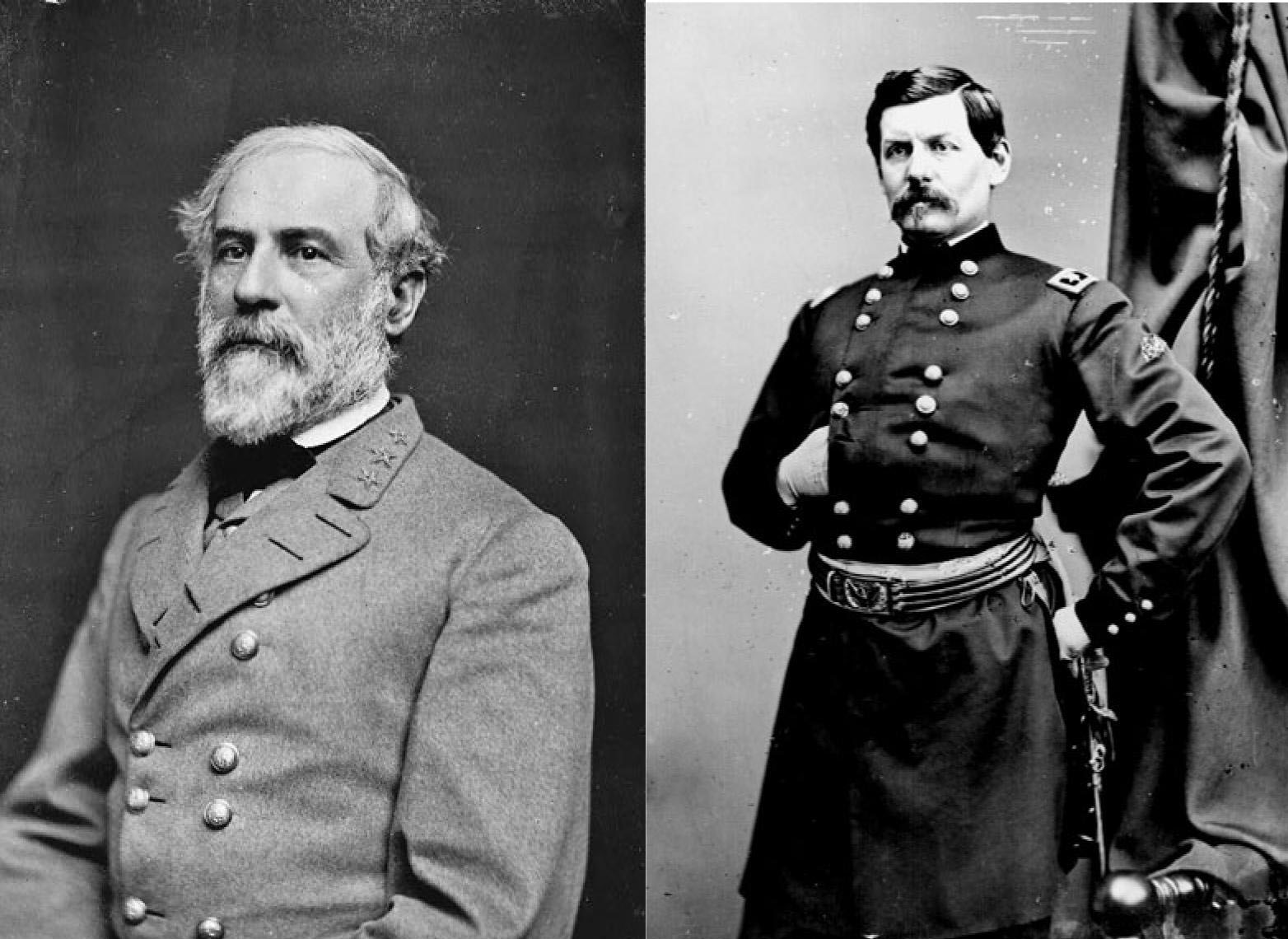
As the Civil War began, U.S.
President Abraham Lincoln struggled to find a competent general to lead Union
forces against those of the Confederacy. His first choice was Robert E. Lee –
an option that evaporated when Lee declared his allegiance to his native Virginia
as it joined the Confederacy.
 |
| General George McClellan |
By fall 1861, following a series
of battlefield disappointments, Lincoln turned to George McClellan, known
primarily for his organizational skills and abilities. McClellan was appointed
general-in-chief for Union armies.
McClellan’s contempt for civilian
leadership became apparent a mere two weeks later. On November 13, 1861, Lincoln,
Secretary of State William Seward, and Lincoln’s secretary John Hay went to
McClellan’s Washington home to discuss issues related to the war. In his diary,
Hay recorded the event:
“I wish here to record what I
consider a portent of evil to come. The President, Governor Seward and I went
over to McClellan's home tonight. The servant at the door said the General was
at the wedding of Colonel Wheaton at General Buell's and would soon return. We
went in, and after we had waited about an hour, McClellan came in, and without
paying any particular attention to the porter who told him the President was
waiting to see him, went up-stairs, passing the door of the room where the
President and Secretary of State were seated. They waited about half an hour,
and sent once more a servant to tell the General they were there; and the
answer came that the General had gone to bed,” Hay wrote.
“I merely record this
unparalleled insolence of epaulettes without comment. It is the first
indication I have yet seen of the threatened supremacy of the military
authorities,” he continued.
“Coming home I spoke to the
President about the matter, but he seemed not to have noticed it, specially,
saying it was better, at this time, not to be making points of etiquette and
personal dignity,” Hay added.
Despite McClellan’s
insubordination, Lincoln did his best to support the General – who called the
President a “baboon” in letters to his wife – in coming months. But over time, Lincoln
became more and more disillusioned with the General, who tended to spend almost
all of his efforts preparing his army for a fight rather than meeting the enemy
on the battlefield. And when McClellan
did move against the Confederate Army, his efforts were weak, tentative, and
unimaginative, producing few if any victories, according to his many critics. He was very popular among his soldiers, however.
Lincoln’s growing frustration
with McClellan’s military dithering reached a head in May 1862, and he demoted
McClellan from his general-in-chief position. A series of other generals followed,
none achieving much success for the Union until Ulysses S. Grant became
general-in-chief in late 1863.
McClellan became the Democratic
nominee for president in 1864, but lost the race to Lincoln, who won his second
term. And Grant, of course, was elected President in 1868.
An interesting side note, though probably of questionable value: McClellan ranked second among 59 students in his West Point military academy class, while Grant ranked 21st among 39 students in his class there.